As you travel Warsaw’s Main Street, you will see evidence of the origins of the community and the changes that time has brought to this Western New York village through the past two centuries. Elizur Webster made the first purchase of land in what would become Warsaw in 1803. He chose the land for its potential as a milling site, using the waterpower available from the Oatka Creek (also known as Allen’s Creek) as well as the agricultural potential of the valley lands. The combination of milling and farming formed the nucleus of Warsaw’s economy until 1841. That year Wyoming County was formed from the southern part of Genesee County. Warsaw became the county seat, providing support for the development of more mercantile and service businesses as well as the county buildings themselves.
The establishment of two railroad services connected the community to the larger national market. Warsaw’s leaders proved adept at attracting manufacturing enterprises during the late nineteenth century.
Warsaw’s growth and its physical appearance was especially influenced by the salt industry. Between 1878 and 1894 Warsaw became the nation’s largest producer of table salt. Main Street reflects the Victorian styles popular at the time.
Warsaw’s downtown Streets and Architecture
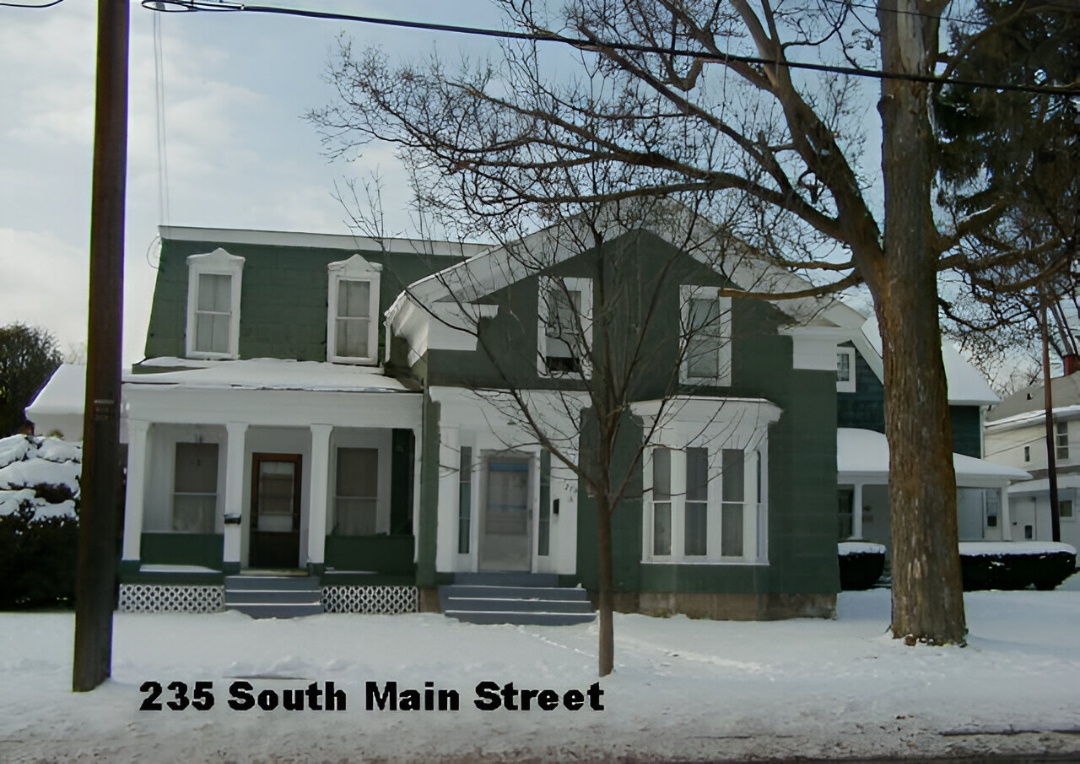
The house on the Southwest corner is an example of Victorian style architecture. Note the decorative detailing on the porches, the siding, and the overall asymmetry.
We haven’t completed a written narrative of the historic district.
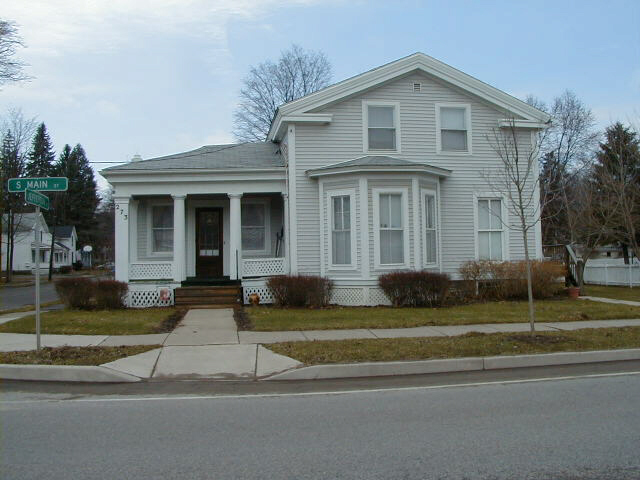
The house on the northwest corner reveals Greek Revival details under modern renovations. See especially the use of a temple-style porch and the wide entablature.